

Table of Contents
ToggleThe story of the ukulele is far more than the tale of a small, cheerful instrument—it is a narrative woven through migration, cultural exchange, craftsmanship, and musical evolution. Ukulele history begins in the late 19th century, but its roots stretch deeper into European traditions, particularly those of Portuguese string instruments. Today, the ukulele is recognized worldwide for its bright, melodic sound and approachable design, yet its origins remain closely tied to the Hawaiian Islands, where it was embraced, transformed, and elevated into a cultural symbol. Understanding ukulele history allows us to appreciate not just the instrument itself, but also the communities and traditions that shaped its development over time.
Origins of Ukulele History in Portugal
To fully grasp ukulele history, one must begin in Portugal, specifically in the Madeira Islands. During the 1800s, Portuguese immigrants brought with them small, guitar-like instruments such as the machete, the rajão, and the braguinha. These instruments were known for their compact size, bright tone, and lively playing style, making them ideal for folk music and social gatherings. When Portuguese laborers traveled to Hawaii to work on sugar plantations, they carried these instruments along as a piece of their cultural identity. This migration played a crucial role in shaping the early stages of ukulele history, as it introduced the foundational design and playing techniques that would later evolve into something uniquely Hawaiian.
The Birth of the Ukulele in Hawaii
Ukulele history took a transformative turn when Portuguese immigrants arrived in Hawaii around 1879. According to historical accounts, locals were fascinated by the speed and agility with which the newcomers played their instruments. The name “ukulele” itself is often translated as “jumping flea,” possibly referring to the rapid movement of the player’s fingers across the strings. Hawaiian craftsmen and musicians began adapting the Portuguese instruments, modifying their size, tuning, and construction to suit local musical preferences. This period marked the true birth of the ukulele as a distinct instrument, blending European design with Hawaiian creativity and cultural expression.
Royal Influence on Ukulele History
One of the most significant factors in the spread of ukulele history was the support of Hawaiian royalty. King Kalākaua, known for his patronage of the arts, played a pivotal role in promoting Hawaiian music and culture. The ukulele became a staple at royal gatherings, celebrations, and performances, which elevated its status among the Hawaiian people. By embracing the instrument, the monarchy helped solidify its place in Hawaiian identity, ensuring that the ukulele would not merely remain a novelty but become a symbol of national pride. This royal endorsement was a turning point in ukulele history, as it encouraged wider adoption and appreciation across the islands.
Expansion of Ukulele History Beyond Hawaii
As the 20th century approached, ukulele history entered a new phase of global expansion. The instrument gained international attention during events such as the Panama-Pacific International Exposition in 1915, where Hawaiian music and culture were showcased to a global audience. The ukulele quickly captured the imagination of people in the United States and beyond, becoming associated with leisure, joy, and tropical charm. During the 1920s and 1930s, it became a popular instrument in American households, often used in jazz and popular music. This era marked the beginning of the ukulele’s journey from a regional instrument to a global phenomenon.
Ukulele History in Modern Music and Culture
Ukulele history did not fade with time; instead, it evolved alongside changing musical trends. While its popularity declined somewhat during the mid-20th century, it experienced a revival in the late 1990s and early 2000s. Artists and musicians rediscovered its unique sound, incorporating it into contemporary genres such as pop, indie, and folk. Today, the ukulele is celebrated for its accessibility, making it a popular choice for beginners and professionals alike. Online platforms, tutorials, and global communities have further fueled its resurgence, ensuring that ukulele history continues to grow and adapt in the digital age.
Different Types in Ukulele History
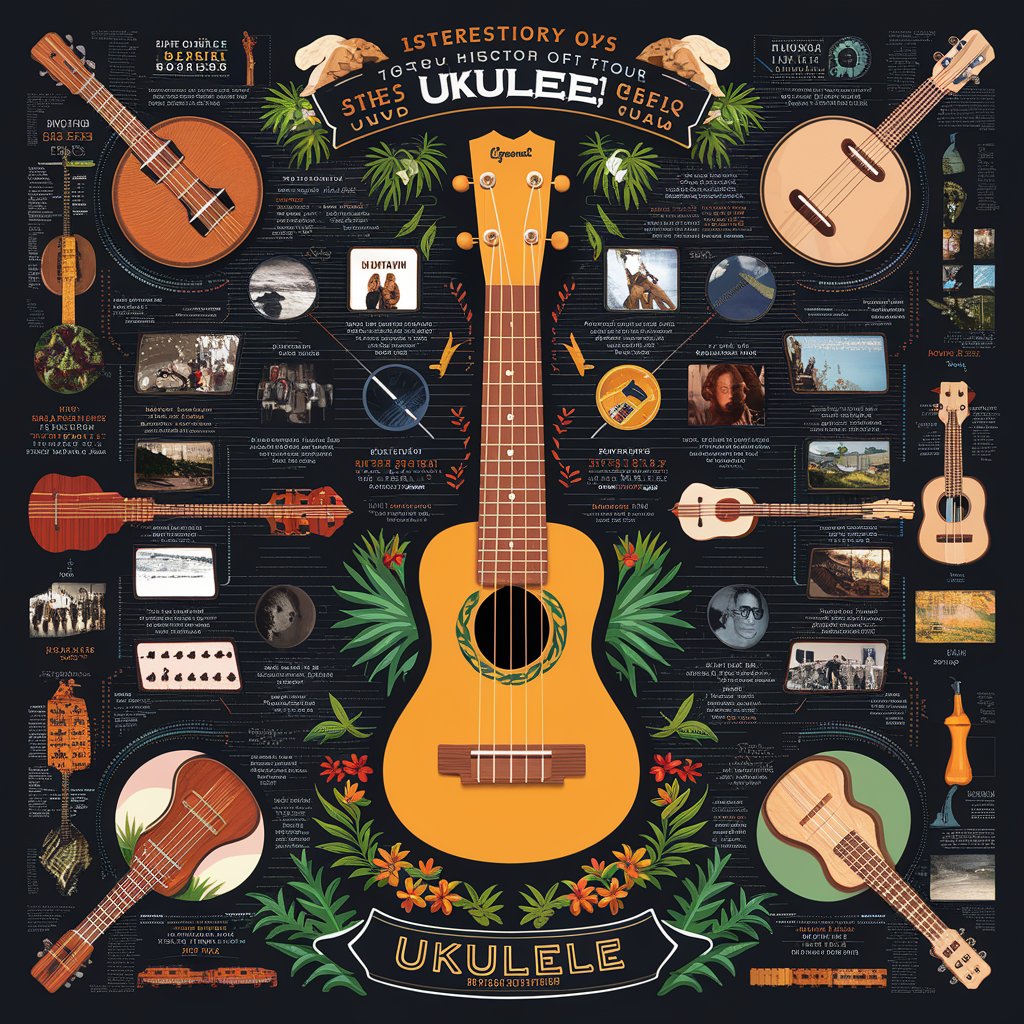
Throughout ukulele history, the instrument has evolved into several distinct types, each with its own size, tuning, and tonal qualities. The soprano ukulele is the smallest and most traditional, closely resembling the original Hawaiian design. The concert ukulele offers a slightly larger body and fuller sound, making it a favorite among performers. The tenor ukulele provides even greater depth and volume, while the baritone ukulele, the largest of the four, produces a tone similar to a classical guitar. These variations reflect the adaptability of the instrument and its ability to meet diverse musical needs across different eras.
Cultural Significance of Ukulele History
Ukulele history is deeply intertwined with Hawaiian culture and identity. The instrument is often associated with traditional Hawaiian music, hula performances, and storytelling. Its gentle, rhythmic sound complements the natural beauty and relaxed lifestyle of the islands, making it an enduring symbol of Hawaiian heritage. Beyond Hawaii, the ukulele has come to represent joy, creativity, and inclusivity, as it is easy to learn and accessible to people of all ages. This cultural significance has helped preserve its legacy, ensuring that ukulele history remains relevant and meaningful across generations.
Conclusion: The Lasting Legacy of Ukulele History
The journey of ukulele history is a testament to the power of cultural exchange and artistic innovation. From its humble beginnings in Portugal to its transformation in Hawaii and eventual rise to global fame, the ukulele has remained a symbol of unity, creativity, and joy. Its enduring appeal lies in its simplicity and versatility, allowing musicians from all backgrounds to connect with it. As new generations continue to embrace the instrument, ukulele history will undoubtedly evolve, adding new chapters to its rich and vibrant story.
Frequently Asked Questions (FAQs)
1. What is the origin of the ukulele?
The ukulele originated in Hawaii but was heavily influenced by Portuguese instruments brought by immigrants from Madeira in the late 19th century.
2. Why is it called a ukulele?
The term “ukulele” is commonly translated as “jumping flea,” possibly describing the quick finger movements of players.
3. When did the ukulele become popular worldwide?
The ukulele gained international popularity in the early 20th century, particularly after the 1915 Panama-Pacific International Exposition.
4. What are the main types of ukuleles?
The four main types are soprano, concert, tenor, and baritone, each differing in size and sound.
5. Is the ukulele easy to learn?
Yes, the ukulele is considered one of the easiest instruments to learn due to its small size, fewer strings, and simple chord structures.
6. Why is the ukulele associated with Hawaii?
The ukulele became deeply integrated into Hawaiian culture through royal patronage, local craftsmanship, and its role in traditional music and performances.