
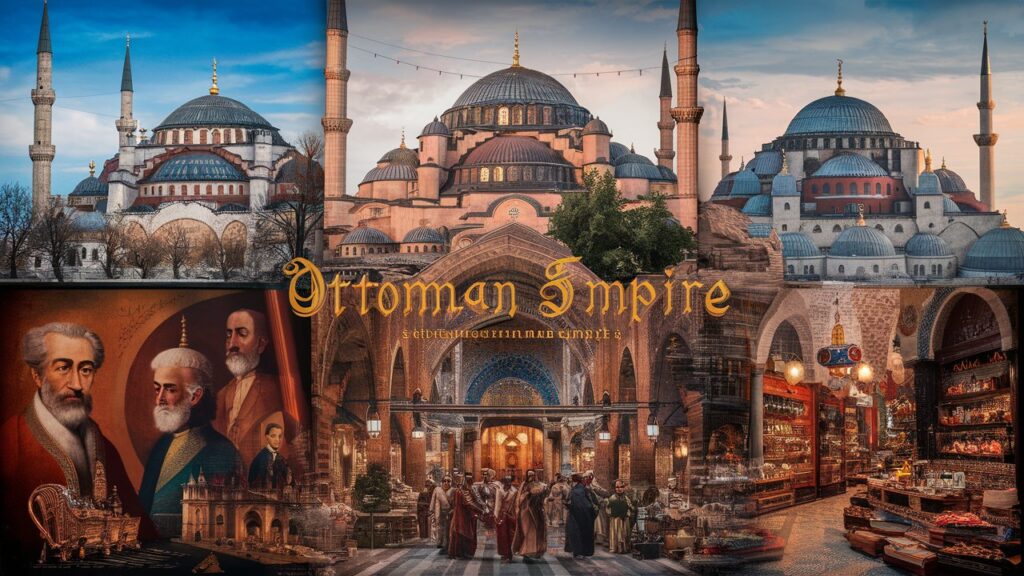

The story of the Ottans, more commonly known as the Ottoman Empire, is one of the most remarkable chapters in world history. Spanning over six centuries, the Ottoman civilization rose from humble beginnings in Anatolia to become one of the most powerful empires the world has ever seen. The Ottoman Empire was not only a political and military powerhouse but also a beacon of cultural, architectural, and intellectual achievement. Its influence extended across Europe, Asia, and Africa, shaping the course of global history and leaving behind a rich Ottoman heritage that continues to inspire scholars, architects, and artists today.
The Ottoman legacy is visible in the magnificent mosques of Istanbul, the intricate calligraphy of Ottoman manuscripts, the refined traditions of Ottoman cuisine, and the enduring impact of its governance and diplomacy. The Ottans were not merely conquerors; they were builders of a civilization that harmonized diverse cultures, religions, and ideas under one imperial vision. This article explores the rise, achievements, and enduring influence of the Ottoman Empire, delving into its history, culture, architecture, and heritage that continue to shape the modern world.
The Rise of the Ottans: From Anatolia to Empire
The origins of the Ottans trace back to the late 13th century, when a small Turkish principality led by Osman I emerged in northwestern Anatolia. From this modest beginning, the Ottoman Empire expanded rapidly, uniting various Turkish tribes and conquering neighboring territories. The Ottomans’ strategic location between Europe and Asia allowed them to control vital trade routes, giving them both economic and military advantages.
Under the leadership of sultans such as Orhan, Murad I, and Bayezid I, the Ottoman state evolved into a formidable power. However, it was during the reign of Mehmed II, known as Mehmed the Conqueror, that the Ottomans achieved one of their greatest triumphs—the conquest of Constantinople in 1453. This event marked the end of the Byzantine Empire and the beginning of a new era in world history. Constantinople, renamed Istanbul, became the capital of the Ottoman Empire and a symbol of its grandeur.
The Ottoman expansion continued under subsequent rulers, including Suleiman the Magnificent, whose reign (1520–1566) represented the golden age of Ottoman history. During this period, the empire reached its territorial peak, stretching from Hungary in the west to Iraq in the east, and from the Arabian Peninsula to North Africa. The Ottomans established a sophisticated administrative system, a powerful military, and a flourishing cultural environment that made them one of the most advanced civilizations of their time.
Ottoman Culture: A Fusion of Traditions and Innovation
The Ottoman culture was a unique blend of Turkish, Persian, Arab, and Byzantine influences, reflecting the empire’s vast and diverse population. The Ottans were known for their ability to integrate different cultural traditions into a cohesive and vibrant civilization. This cultural synthesis was evident in art, literature, music, and daily life.
Ottoman art flourished under royal patronage, with calligraphy, miniature painting, and tilework reaching new heights of sophistication. The art of Ottoman calligraphy, in particular, became a spiritual and aesthetic expression of Islamic devotion. The Ottoman court also nurtured poets, scholars, and musicians who contributed to a rich intellectual and artistic environment.
Ottoman cuisine reflected the empire’s diversity, combining flavors from the Middle East, the Balkans, and Central Asia. Dishes such as kebabs, baklava, and Turkish coffee became symbols of Ottoman heritage and continue to be enjoyed worldwide. The Ottoman lifestyle emphasized hospitality, refinement, and balance, values that remain deeply embedded in modern Turkish culture.
Education and scholarship were also central to Ottoman civilization. The establishment of madrasas (Islamic schools) and libraries ensured the preservation and transmission of knowledge. The Ottomans made significant contributions to science, medicine, and philosophy, building upon the intellectual traditions of earlier Islamic and Byzantine scholars.
Ottoman Architecture: The Crown Jewel of Ottoman Civilization
Among the most enduring aspects of Ottoman heritage is its architecture, which stands as a testament to the empire’s artistic and engineering brilliance. Ottoman architecture evolved from the Seljuk and Byzantine styles, blending Islamic aesthetics with innovative structural designs. The result was a distinctive architectural identity that symbolized both spiritual devotion and imperial power.
The most iconic examples of Ottoman architecture are found in Istanbul, the heart of the empire. The Süleymaniye Mosque, designed by the legendary architect Mimar Sinan, epitomizes the grandeur and harmony of Ottoman design. Its vast dome, elegant minarets, and intricate interior decorations reflect the empire’s mastery of form and function. Sinan’s other masterpieces, such as the Selimiye Mosque in Edirne, further demonstrate the sophistication of Ottoman engineering and aesthetics.
Beyond religious structures, the Ottans built palaces, bridges, baths, and caravanserais that showcased their architectural ingenuity. The Topkapi Palace, once the residence of Ottoman sultans, remains a symbol of imperial luxury and administrative power. Its courtyards, pavilions, and gardens illustrate the refined taste and organizational skill of the Ottoman court.
The influence of Ottoman architecture extended far beyond the empire’s borders. From the Balkans to North Africa, countless mosques, fountains, and public buildings bear the hallmarks of Ottoman design, leaving a lasting imprint on the architectural heritage of multiple regions.
The Ottoman Legacy: Influence on Modern Civilization
The Ottoman legacy continues to shape the modern world in profound ways. Politically, the empire’s administrative systems influenced the governance structures of many successor states in the Middle East and the Balkans. The Ottoman millet system, which allowed religious communities to govern themselves under imperial oversight, laid the groundwork for modern concepts of multiculturalism and coexistence.
Culturally, the Ottoman heritage endures through language, art, and traditions. The Turkish language, enriched by Arabic and Persian influences, became a vehicle for literature and diplomacy. Ottoman music, with its intricate rhythms and melodies, continues to inspire contemporary artists. The empire’s emphasis on education and scholarship also contributed to the intellectual foundations of modern Turkey and other nations that once formed part of its vast domain.
Economically, the Ottoman Empire played a crucial role in connecting East and West through trade. Its strategic control of key routes facilitated the exchange of goods, ideas, and technologies between continents. This legacy of connectivity remains relevant today, as Turkey continues to serve as a bridge between Europe and Asia.
The fall of the Ottoman Empire after World War I marked the end of an era, but its influence persists in the political, cultural, and architectural landscapes of the modern world. The Ottans left behind a civilization that valued diversity, innovation, and harmony—a legacy that continues to inspire admiration and study.
Conclusion
The story of the Ottans is a story of resilience, creativity, and enduring influence. The Ottoman Empire was not merely a political entity; it was a civilization that shaped the course of history through its achievements in governance, culture, and architecture. From the majestic domes of Istanbul to the poetic verses of Ottoman scholars, the Ottoman legacy continues to illuminate the world with its brilliance.
As we reflect on the contributions of the Ottoman civilization, we recognize that its true greatness lies not only in its conquests but in its ability to unite diverse peoples and ideas under a shared vision of progress. The Ottans built bridges—both literal and metaphorical—that connected continents, cultures, and generations. Their heritage remains a testament to the power of human creativity and the enduring spirit of civilization.
Frequently Asked Questions (FAQ)
1. Who were the Ottans?
The Ottans, or Ottomans, were the rulers of the Ottoman Empire, a powerful civilization that lasted from the late 13th century to the early 20th century.
2. When was the Ottoman Empire founded?
The Ottoman Empire was founded around 1299 by Osman I in northwestern Anatolia.
3. What was the capital of the Ottoman Empire?
The capital was Istanbul (formerly Constantinople), which became the center of Ottoman culture, politics, and architecture.
4. What is the Ottoman Empire known for?
The Ottoman Empire is known for its military strength, administrative efficiency, cultural diversity, and architectural masterpieces.
5. Who was Suleiman the Magnificent?
Suleiman the Magnificent was one of the most famous Ottoman sultans, known for expanding the empire and fostering a golden age of Ottoman culture and law.
6. What are some famous examples of Ottoman architecture?
Notable examples include the Süleymaniye Mosque, Selimiye Mosque, and Topkapi Palace, all of which reflect the grandeur of Ottoman architecture.
7. How did the Ottoman Empire influence modern civilization?
The Ottoman legacy influenced modern governance, art, architecture, and cultural exchange between East and West.
8. What led to the decline of the Ottoman Empire?
Internal conflicts, economic challenges, and the rise of European powers contributed to the gradual decline of the Ottoman Empire in the 19th and early 20th centuries.
9. What is the Ottoman heritage today?
The Ottoman heritage lives on through architecture, cuisine, language, and cultural traditions in Turkey and former Ottoman territories.
10. Why is the Ottoman Empire important in world history?
The Ottoman Empire played a crucial role in connecting continents, fostering cultural exchange, and shaping the political and cultural landscape of the modern world.