
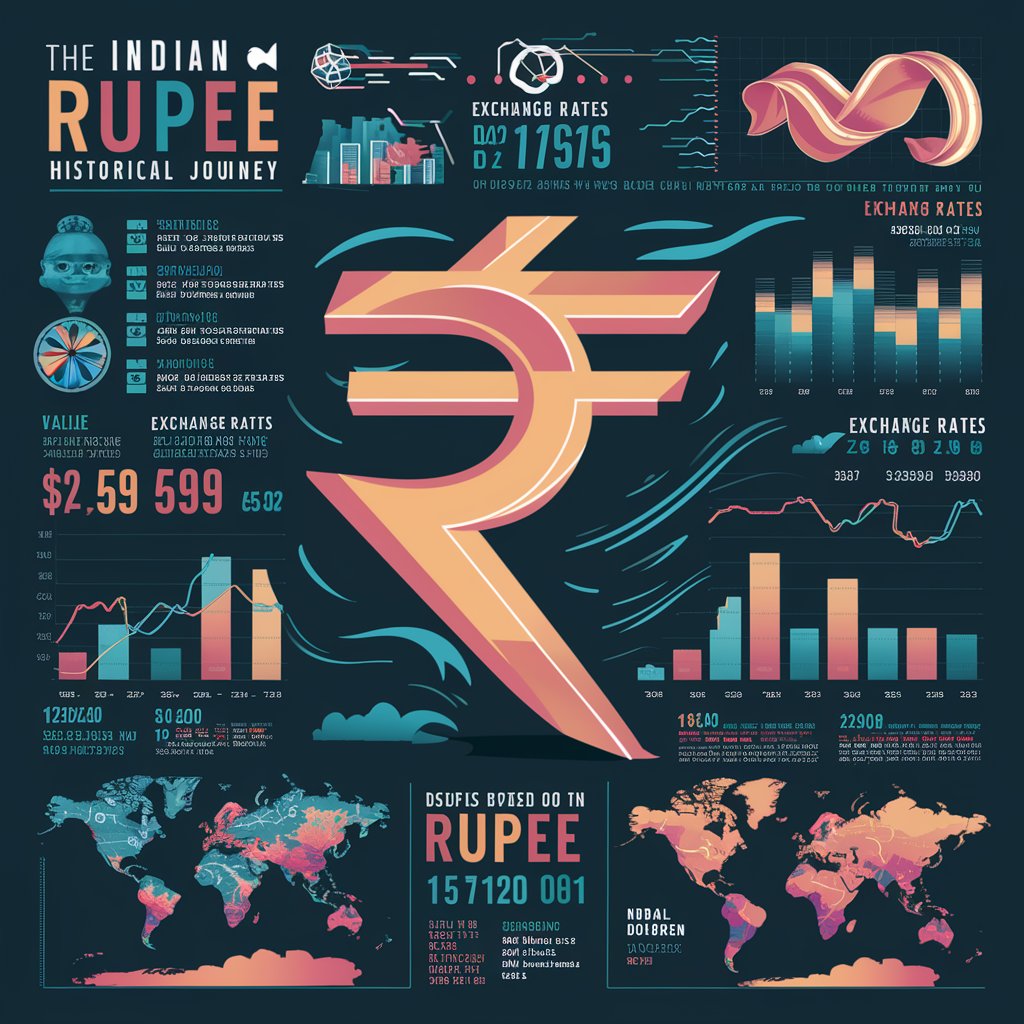

The Indian Rupee (INR) is the official currency of the Republic of India and one of the most recognized currencies in the global financial system. Managed and regulated by the Reserve Bank of India (RBI), the rupee plays a vital role in shaping the country’s economic stability, trade relations, and international financial standing.
As India continues to expand its global trade footprint, the rupee’s value and performance again
st major currencies like the US Dollar, Euro, and Pound Sterling have become crucial for investors, policymakers, and businesses worldwide. Understanding the history, value, and exchange dynamics of the Indian Rupee provides valuable insight into the broader landscape of the Indian economy and its integration into the global financial system.
The History and Evolution of the Indian Rupee
The history of the Indian Rupee dates back several centuries, evolving from ancient trade coins to the modern digital currency system. The term “rupee” originates from the Sanskrit word rūpya, meaning “wrought silver.” The first rupee was introduced in the 16th century by Sher Shah Suri, who issued silver coins weighing 178 grains. Over time, the rupee became the standard currency across the Indian subcontinent.
During the British colonial period, the rupee underwent significant changes, including the introduction of paper money and the establishment of the Reserve Bank of India in 1935, which became the sole authority for issuing currency. After India gained independence in 1947, the rupee was decimalized in 1957, dividing it into 100 paise.
In the decades that followed, the INR currency transitioned from a fixed exchange rate system to a more flexible, market-driven model. The l Today, the Indian Rupee is a symbol of national identity and economic progress, representing one of the world’s fastest-growing economies.
The INR Currency Symbol and Denominations
Designed by Udaya Kumar, the symbol combines the Devanagari letter “र” (Ra) and the Latin letter “R,” reflecting both Indian tradition and international recognition. The introduction of the rupee symbol marked a significant milestone, giving the currency a unique global identity similar to the US Dollar ($), Euro (€), and Pound (£).
The Reserve Bank of India periodically updates the design and security features of these notes to prevent counterfeiting and enhance usability.
The Role of the Reserve Bank of India (RBI)
The Reserve Bank of India (RBI) is the central authority responsible for managing the issuance, circulation, and stability of the Indian Rupee. It regulates monetary policy, controls inflation, and ensures the smooth functioning of the foreign exchange market. The RBI also intervenes in the forex market to stabilize the INR exchange rate and prevent excessive volatility.
Through its monetary policies, the RBI influences the value of the INR by adjusting interest rates, managing foreign reserves, and implementing measures to control inflation.
INR Exchange Rates and the Forex Market
The INR exchange rate represents the value of the Indian Rupee relative to other global currencies. The most commonly tracked rate is INR to USD, as the US Dollar serves as the world’s primary reserve currency.
Factors Influencing the Value of the Indian Rupee
The value of the INR is influenced by a combination of domestic and global factors. Key determinants include:
- Inflation and Interest Rates: High inflation tends to weaken the rupee, while higher interest rates attract foreign investment, strengthening the currency.
- Trade Balance: A trade deficit (when imports exceed exports) puts downward pressure on the rupee, while a trade surplus supports its value.
- Foreign Investment: Inflows of foreign direct investment (FDI) and foreign portfolio investment (FPI) increase demand for the rupee, boosting its value.
- Global Oil Prices: As India imports a significant portion of its crude oil, rising oil prices can lead to rupee depreciation due to increased foreign currency demand.
- Economic Growth: Strong GDP growth enhances investor confidence and supports a stable or appreciating rupee.
Understanding these factors helps policymakers and investors anticipate currency fluctuations and make informed decisions in the forex market.
Rupee Depreciation and Its Economic Impact
Depreciation can result from factors such as rising oil prices, widening trade deficits, or global economic uncertainty. The Reserve Bank of India often intervenes to stabilize the rupee by selling foreign reserves or adjusting monetary policy.
INR in the Global Economy and Currency Trading
The Indian Rupee plays an
increasingly important role in the global economy as India strengthens its position as a major emerging market.
India’s growing trade partnerships, expanding technology sector, and robust financial markets have enhanced the rupee’s global relevance.
Currency Conversion and INR to USD Exchange
Currency conversion is the process of exchanging one currency for another, such as converting INR to USD or vice versa. This process is essential for international trade, travel, and investment.
For example, if the INR to USD exchange rate is 83, it means one US Dollar equals 83 Indian Rupees.
Conclusion
From its historical origins to its modern role in the forex market, the rupee reflects the dynamic evolution of the Indian economy. Managed by the Reserve Bank of India, the INR strong continues to adapt to global financial trends, balancing domestic growth with international competitiveness.
As India’s influence in global trade and finance expands, the rupee’s value and stability will remain central to the country’s economic strategy.